
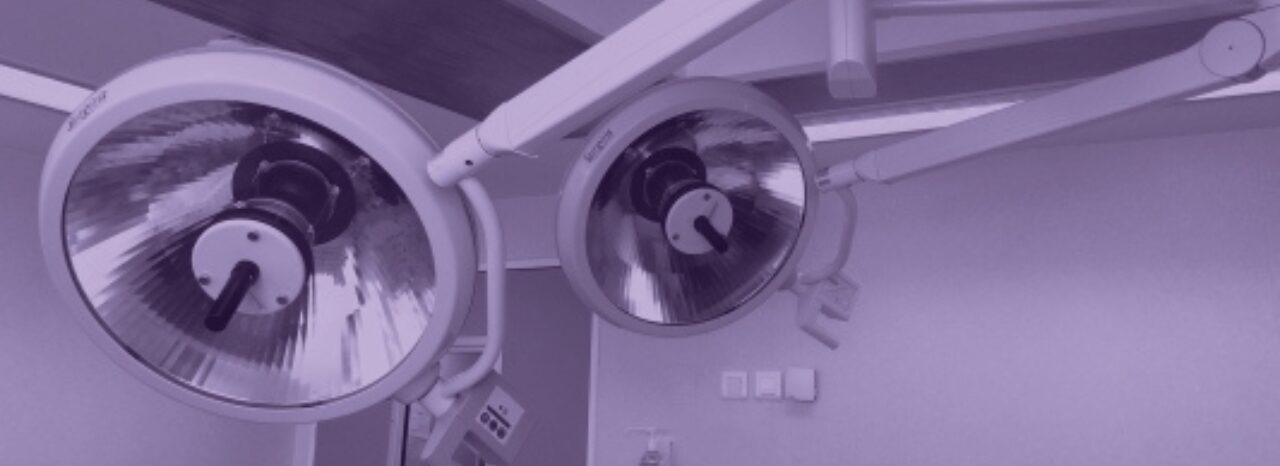
Surgical lighting has been around for years, but it has evolved to better meet the needs of healthcare facilities. They have also adapted to developments in the medical sector and advances in surgical techniques, etc.
Before surgical lighting

We are in the 1800s.Before the advent of surgical lighting, surgeons depended on different times of day, weather conditions, and seasons to perform operations on their patients.
In fact, surgeons were forced to choose specific times of day when the sun's rays were strongest in order to illuminate their surgical field. In addition, the operating rooms were carefully designed, with the operating suites built on the southeast side and ceiling windows incorporated to maximize natural light.
Some time later, someone had the ingenious idea of hanging a multitude of mirrors from the ceiling of the operating room to allow sunlight to reflect onto the surgical field. However, this solution only postponed the problem faced by surgeons, as daylight provided increased lighting but also cast shadows from the surgeon's head or movements onto the patient.
This raises the question: "How can the surgical field be illuminated with a light source without casting shadows?"
The birth of surgical lighting
Before the advent of surgical lighting, healthcare facilities tried to find solutions such as using simple lamps hung from the ceiling.
It was at the beginning of the 20th century, more precisely in 1919, that Professor Louis Verain of the Faculty of Sciences in Algiers designed a lighting device called the "SCIALYTIQUE," offering a concentrated and adjustable light field that eliminated almost all shadows. The brand name Scialytique has now become a generic term in hospital vocabulary to designate a very specific type of lighting.
In the 1960s, General Electric patented the first halogen lamp. These halogen lamps are commonly used in operating rooms because of their ability to produce bright, clear light.
They consist of a filament surrounded by halogen gas, which produces a bright, precise light. However, halogen lamps have several disadvantages, such as:
- Heat: Halogen lamps generate a large amount of heat, which can be uncomfortable for surgeons, operating room staff, and patients.
- Light: Halogen lamps are often perceived as being too bright, which can make it difficult to see the surgical field.
- Energy: Halogen lamps consume a lot of energy and require high electricity consumption, which can be costly for the hospital.
- Lifespan: Halogen lamps have a relatively short lifespan, which means they need to be replaced frequently, potentially causing interruptions in operations.
Due to these numerous disadvantages, many operating rooms have opted for alternative light sources, such as LED lamps.
Make way for change
Today, we have said goodbye to surgical lights and halogen lamps, which have been replaced by LED lighting that reduces energy requirements and lowers environmental impact.
These LEDs are becoming the essential component for high-quality, high-performance surgical lighting, as they offer numerous advantages, such as:
- Light: LED lamps generate more uniform light than other light sources, allowing surgeons to see the finest details and perform their operations with precision.
- Energy: LED lamps are much more energy efficient than traditional lamps. This makes them more environmentally friendly and economical to use in the long term.
- Lifespan: LED lamps have a longer lifespan and require less maintenance. This means less downtime for operating rooms and more efficient use of equipment.
In conclusion, the use of LED lamps in operating rooms offers significant advantages in terms of efficiency, performance, and long-term costs.
By delving into the history of surgical lighting, we have seen that these essential devices for operating rooms have evolved with the times and adapted to the expectations of their users.
As a player in the medical sector and leader in the French surgical lighting market, the SURGIRIS is driven daily by innovation, offering healthcare facilities innovative and high-performance products that make their daily work easier.